
 Cargo Theft Losses Are Surging: Is Your Coverage Keeping Up?
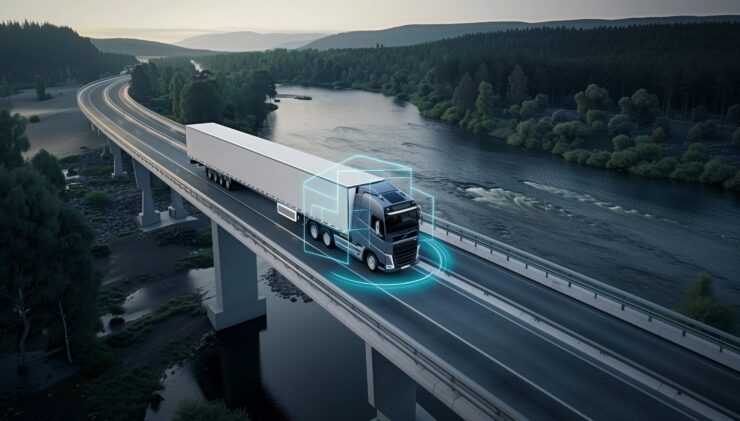
The road is a dangerous place. With the right tools, you can make it a little less dangerous. New trucking safety technologies are helping businesses in the transportation sector reduce the risk of collisions, prevent injuries and reduce their liability. Below are a few technologies to consider.
Inward-Facing Dashcams
Inward-facing dashcams monitor the driver. These dashcams can help identify bad driver habits so training can be implemented before an accident occurs, and drivers may be more likely to avoid risky behaviors if they know they’re being watched.
This is important because driver behavior contributes to a significant number of collisions. According to Risk & Insurance, Motive’s 2026 AI Road Safety Report found that driver behaviors, including smoking behind the wheel, cellphone use, and aggressive driving, are top drivers of collisions.
In the event of a collision, inward-facing dashcams may also help exonerate the driver by showing that the driver was focused on the road and driving safely in the moments leading up to the crash.
Forward-Facing Dashcams
Forward-facing dashcams record the road ahead. After a crash, legal battles can become a case of he-said/she-said, and without a witness, it may be impossible to prove that your driver wasn’t at fault.
Dashcam records can provide evidence. If your drivers are innocent, dashcam video could shield you from nuclear verdicts and tarnished FMCSA Safety Measurement System records. The FMCSA accepts video evidence as part of its Crash Preventability Determination Program.
AI-Powered Dashcams
Dashcams enabled by artificial intelligence go beyond simply recording footage to provide real-time analysis. When you integrate AI into dashcam technology, you can detect problems like distracted or drowsy driving as it happens, so action can occur immediately to control the risk. Forward-facing dashcams with AI can also detect hazards on the road and provide real-time alerts.
What About Privacy Issues?
Some people don’t like being recorded, especially if they think the recordings might be used against them. When introducing dashcams, it’s important to get drivers on board by showing them how the technology can help keep them safe. Businesses also need to assess their potential privacy risks, especially when using AI-powered dashcams that could run afoul of biometric privacy laws. According to ClassAction.org, fleet management and safety company Samsara agreed to pay $3.95 million to settle a lawsuit accusing its Camera ID feature of recording and storing biometric data without the required consent. Review the relevant biometric privacy and wiretapping laws in the states where you operate to make sure you’re in compliance.
Advanced Driver Assistance Systems
The NHTSA estimates that there were 91,000 police-reported crashes involving drowsy drivers in a single year, resulting in 50,000 injuries and 800 deaths. The real numbers may be higher because it’s often difficult to prove that drowsiness was responsible after the fact. Commercial drivers on long hauls can be especially vulnerable.
Advanced driver assistance systems (ADAS) can give drivers the support they need on the road. Important features include:
- Lane Departure Warnings. If the vehicle starts to drift from the lane, an alert notifies the driver.
- Forward-Collision Warnings. If systems detect a hazard ahead, and a collision is imminent, an alert notifies the driver.
- Automatic Braking. If a collision is imminent and the driver fails to respond, the system applies the brakes automatically. Starting in 2029, the NHTSA says vehicle manufacturers are required to make automatic braking a standard feature in cars and light trucks, and the FMCSA has proposed making it required on heavy vehicles as well.
Blindspot Detection
Commercial trucks are large, bulky vehicles, and the driver’s visibility is limited. For decades, the solution to this problem was to have other people give trucks a wide berth. A huge truck can do a lot of damage, so it seems logical to stay out of its way.
Unfortunately, this “common knowledge” may not be so common. A 2024 survey from FinditParts found that fewer than 5% of Americans can correctly point out all of the blind spots on a semi-truck, and 80% don’t realize that semi-trucks have a blind spot directly in front of them. One in three don’t know how to pass a semi-truck safely, and 65% of drivers who feel unsafe around semi-trucks blame the truck or driver.
For truckers, this is a serious problem. Drivers who aren’t aware of blind spots may move into dangerous areas, leading to crashes, and juries that don’t understand blind spots may hold truckers accountable. It’s hard to change public sentiment, but it’s fairly easy to install new blind spot detection systems. These systems can alert drivers to hazards, such as cars and pedestrians, in blind spots, making it easier for truckers to change lanes safely.
Are You Managing Your Risks?
Technology is helping truckers and fleet operators manage their risks, but comprehensive insurance is still critical. Heffernan Insurance Brokers provides transportation insurance and risk management solutions for the transportation industry. Learn more.